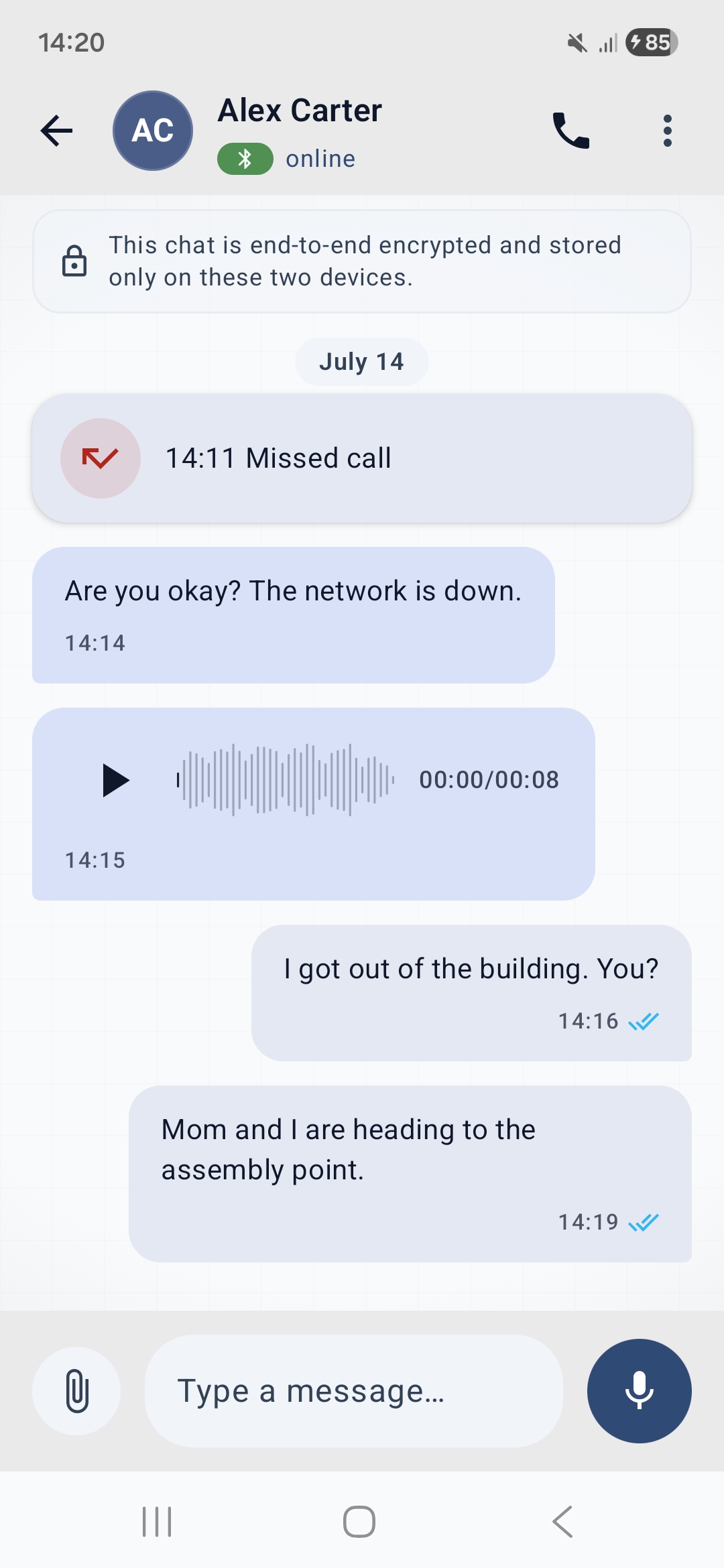
Built by a 17-year-old student, the open-source iOS and Android app enables nearby phones to communicate without internet or cellular service.
ISTANBUL, TURKEY, August 26, 2026 /EINPresswire.com/ — Crisis Connect, an open-source emergency communication platform designed for situations in which internet and cellular networks become unavailable or overloaded, is expanding its approach to disaster communication across mobile users, field teams and emergency management organizations.
Available on Android and iOS, Crisis Connect combines internet-based communication with an offline-first layer that allows supported nearby devices to communicate directly when conventional connectivity is unavailable. The Android version has surpassed 10,000 downloads on Google Play.
During earthquakes, floods, wildfires, large-scale power outages and other emergencies, communication infrastructure can be damaged or overwhelmed by sudden demand. Crisis Connect is designed around the idea that emergency communication should not depend on a single network remaining operational.
When connectivity is available, the platform provides internet-based communication while aiming to use network and device resources efficiently. This is particularly relevant during emergencies in which infrastructure remains operational but becomes congested because of unusually high demand.
When internet and cellular service are unavailable, Crisis Connect can use direct device-to-device communication over Bluetooth, allowing nearby supported phones to exchange information without relying on mobile data, an active SIM card or a functioning cellular tower.
The platform is not intended to replace emergency hotlines, professional radio systems, satellite communications or official public-safety infrastructure. Instead, it is being developed as an additional communication layer that can remain useful when conventional systems are unavailable or under severe strain.
More Than Offline Messaging
Crisis Connect is designed as a broader disaster-focused mobile environment rather than a standalone offline messenger.
The application brings communication, SOS functionality, location sharing and a growing collection of emergency tools into a single interface. The goal is to reduce the need for users to depend on multiple online services or applications during a crisis, especially when connectivity and access to information are limited.
The project also includes capabilities designed around communication between people affected by a disaster and teams operating in the field.
In supported proximity scenarios, field personnel and Crisis Connect users can establish two-way communication without internet or cellular service. This model is intended to provide more than a one-directional distress signal: it can also give responders a way to communicate information back to affected users when conventional networks are unavailable.
Development continues around offline communication reliability, SOS workflows and tools intended for use by both individuals and field teams during disaster response.
Connecting Individuals and Emergency Management Organizations
Alongside the mobile application, the project includes Crisis Connect Hub, an AI-supported disaster and crisis management and decision-support platform designed for emergency operations centers, public institutions and organizations involved in disaster coordination.
Crisis Connect Hub is being developed to bring communication, field information, incident monitoring and decision-support capabilities into a shared operational environment.
Artificial intelligence within the platform is intended to support — rather than replace — human decision-making by helping emergency managers process large volumes of information and surface relevant information during rapidly evolving incidents.
The long-term vision is to connect the citizen-facing and field communication capabilities of Crisis Connect with institutional coordination tools, creating a broader communication and decision-support ecosystem that can operate across different stages of a disaster.
An Open-Source Approach to Disaster Communication
Crisis Connect is developed as an open-source project, with its source code publicly available on GitHub.
The open-source model allows developers, researchers and technical communities to inspect the system, contribute improvements and evaluate how the technology works. This approach is particularly relevant in emergency communication, where transparency, reliability and trust can be critical.
The broader offline-first approach behind Crisis Connect has also been discussed internationally. An article examining why disaster risk management needs an offline-first communication layer was published on PreventionWeb, the knowledge platform of the United Nations Office for Disaster Risk Reduction (UNDRR).
The article explores the risks of assuming that internet and cellular infrastructure will remain available throughout a disaster and argues for communication strategies in which multiple technologies can complement one another.
Developed by a 17-Year-Old Student
Crisis Connect and Crisis Connect Hub are being developed by Emirhan Duman, a 17-year-old high school student and software developer in Istanbul, Turkey.
The project began with a simple question: if smartphones remain operational after a disaster, why should they become unable to communicate solely because the infrastructure connecting them has failed?
That question evolved into an open-source project aimed at making emergency communication more resilient by combining conventional connectivity with technologies capable of operating independently of central infrastructure.
Crisis Connect is currently available on Android and iOS, while development continues across its offline communication, emergency tools, field-response capabilities and institutional Crisis Connect Hub platform.
Emirhan Duman
Crisis Connect
emirhan@crisisconnect.network
Visit us on social media:
LinkedIn
Legal Disclaimer:
EIN Presswire provides this news content “as is” without warranty of any kind. We do not accept any responsibility or liability
for the accuracy, content, images, videos, licenses, completeness, legality, or reliability of the information contained in this
article. If you have any complaints or copyright issues related to this article, kindly contact the author above.

Media gallery